Paychecks beyond the fence line: what USDA surveys record about off-farm income
The Economic Research Service has tracked the finances of farm households for decades. Its figures show how much rural families rely on work away from the fields, and how much hinges on what counts as a farm.
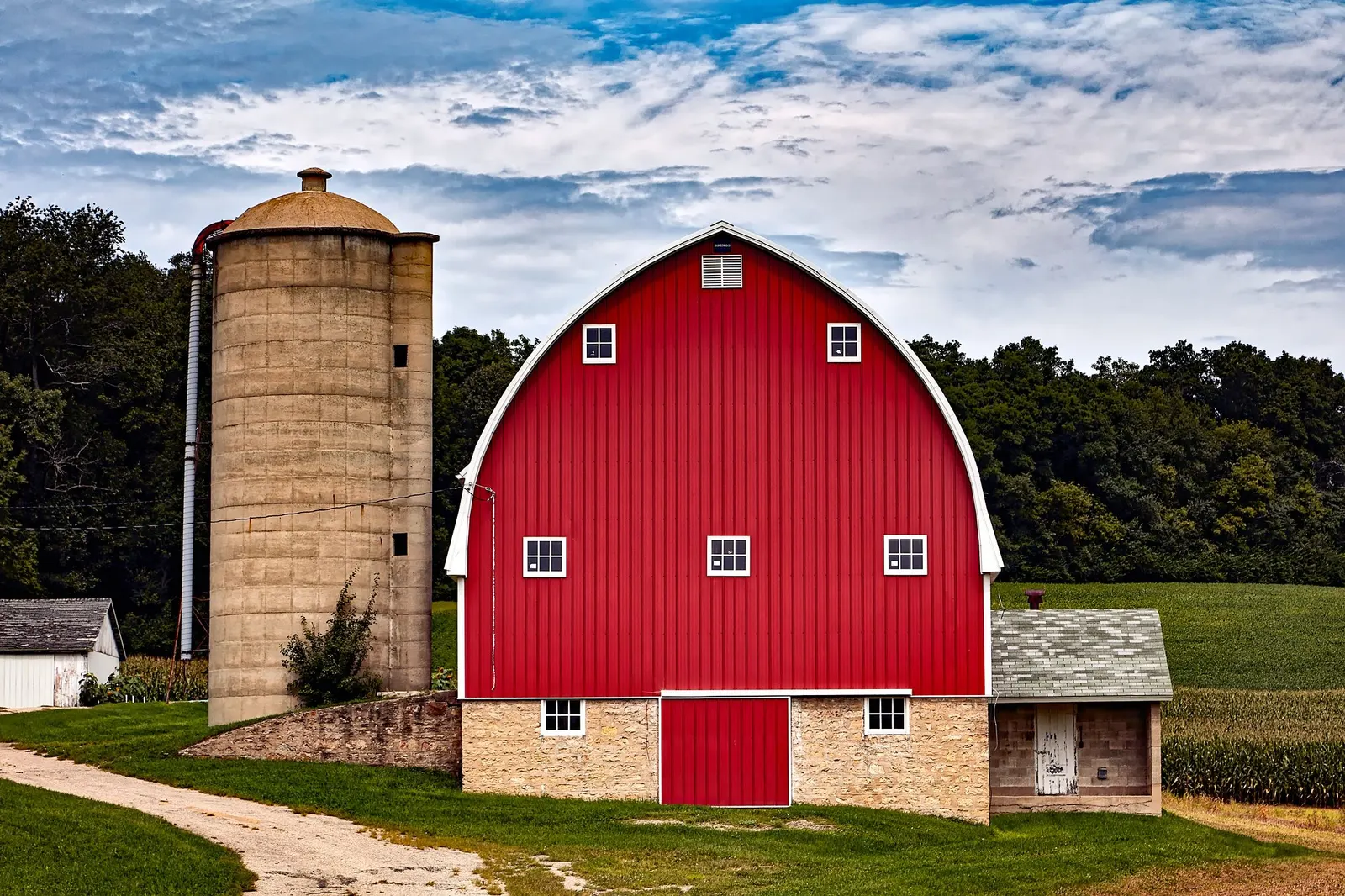
Public debate about American agriculture usually treats the farm as a business. The data gathered by the U.S. Department of Agriculture's Economic Research Service (ERS) describe something else for most operations: a household whose income comes mainly from jobs, other businesses and transfers that have little to do with the crops or animals it raises.
What the annual survey finds
The main source is the Agricultural Resource Management Survey (ARMS), run jointly by ERS and the National Agricultural Statistics Service. The 2025 edition of America's Farms and Ranches at a Glance, by Katherine Lacy, Kate Binzen Fuller, Sharon Raszap Skorbiansky and Katherine Lim, drew on roughly 18,250 farms surveyed for 2024. It put the national total at about 1.87 million farms, 86 percent of them small family farms with gross cash farm income below $350,000.
Across all family farms, 86 percent of households earned more than half of their total income from off-farm sources. For retirement farms, off-farm-occupation farms and low-sales farms, that share reached at least 90 percent. In the same year, 52 percent of retirement farms, 68 percent of off-farm-occupation farms and 63 percent of low-sales farms reported a loss from the farming operation itself.
An earlier ERS analysis by Anil Giri, Dipak Subedi, Jessica Todd, Carrie Litkowski and Christine Whitt, based on the 2019 survey, broke off-farm income into its parts. About 72 percent was earned: wages and salaries made up 61 percent and nonfarm businesses 11 percent. The remainder came from government transfers (19 percent), miscellaneous sources (6 percent) and interest and dividends (4 percent). Only on the largest operations, with gross cash farm income of $5 million or more, did off-farm sources drop to about 7 percent of household income.
Why the work happens elsewhere
Christine Whitt and Jessica Todd, writing in the ERS magazine Amber Waves in 2020, reported that in 2018 about 45 percent of principal operators and spouses on family farms held a job off the farm. Among operators whose main occupation was something other than farming, the figure was 83 percent. Respondents listed higher and steadier income, health insurance and retirement benefits among their reasons, and spouses mentioned health coverage consistently. Around 40 percent of those with off-farm jobs also pointed to financial stress on the farm.
A longer view came from Jorge Fernandez-Cornejo and colleagues in a 2007 ERS report. Using ARMS data from 1996 to 2001 and national surveys of corn and soybean growers, they found that off-farm work and income rose as farm size fell, and that some time-saving technologies, such as herbicide-tolerant soybeans, went together with higher off-farm income. The authors read this as smaller operations offsetting scale disadvantages with outside work. The data were cross-sectional, however, and could not establish which came first.
What the definition does to the numbers
Much depends on how a farm is defined. Since the 1970s, USDA has counted as a farm any place that produced and sold, or normally would have sold, at least $1,000 of agricultural products in a year. That threshold has never been adjusted for inflation, so it admits operations with very small sales. The ERS farm typology, last revised in 2013 by Robert Hoppe and James MacDonald, sorts small family farms by the principal producer's reported occupation, which sets retirement and off-farm-occupation farms apart from those run as a main job.
Several cautions follow from this. A large share of farm households have their main economic life somewhere else, so the high off-farm share partly reflects the definition rather than any shift within farming. Occupation categories rest on what respondents say about themselves. ARMS is a sample survey with sampling error, and small categories can move from one year to the next for statistical reasons alone. The figures are also shares and averages across very different operations, from a few acres of hay to a dairy with hired staff.
What the surveys document clearly is that, for most American farm households, the farm is one income stream among several, and often not the largest one.
Sources
- Lacy, K., Fuller, K. B., Raszap Skorbiansky, S., & Lim, K. (2026). America's farms and ranches at a glance: 2025 edition (Report No. EIB-299). U.S. Department of Agriculture, Economic Research Service. https://www.ers.usda.gov/media/20834/eib-299.pdf
- Giri, A. K., Subedi, D., Todd, J. E., Litkowski, C., & Whitt, C. (2021, September 7). Off-farm income a major component of total income for most farm households in 2019. Amber Waves, U.S. Department of Agriculture, Economic Research Service. https://www.ers.usda.gov/amber-waves/2021/september/off-farm-income-a-major-component-of-total-income-for-most-farm-households-in-2019
- Whitt, C., & Todd, J. E. (2020, March 2). Family farm households reap benefits in working off the farm. Amber Waves, U.S. Department of Agriculture, Economic Research Service. https://www.ers.usda.gov/amber-waves/2020/march/family-farm-households-reap-benefits-in-working-off-the-farm
- Fernandez-Cornejo, J. (2007). Off-farm income, technology adoption, and farm economic performance (Economic Research Report No. 36). U.S. Department of Agriculture, Economic Research Service. https://ers.usda.gov/publications/45744
- Hoppe, R. A., & MacDonald, J. M. (2013). Updating the ERS farm typology (Economic Information Bulletin No. 110). U.S. Department of Agriculture, Economic Research Service. https://ers.usda.gov/publications/43744
This article is general educational content published by North Grain. It is not professional advice and does not describe or assume anything about any individual reader. See the disclaimer.