Homemade meals for sale: food freedom laws and what safety records can show
A handful of mostly rural states now allow perishable food from home kitchens. A law clinic's survey, an advocacy group's records requests and federal illness estimates frame the debate over risk.
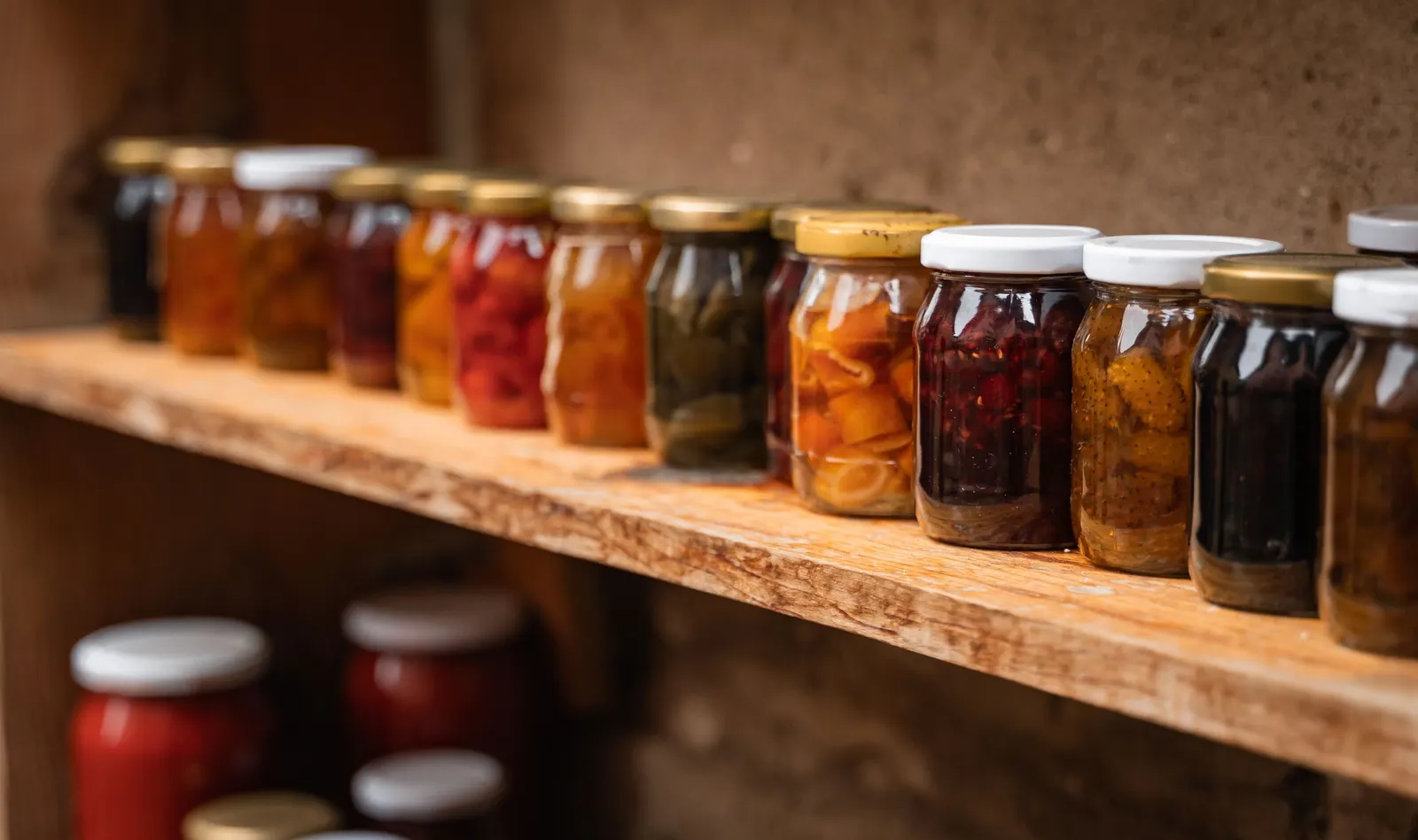
Most states that allow food from home kitchens to be sold limit it to items that keep without refrigeration, such as breads, cookies and jams. A smaller group has gone further and permits meals and other perishable foods, sometimes with no license at all. Several of those states, including Wyoming, Montana and North Dakota, are largely rural. Research on how these laws work is thin, and much of it comes from organizations with a position in the debate.
Four kinds of law
A fifty-state survey from the Harvard Law School Food Law and Policy Clinic, current as of December 2021, mapped these rules. It placed state laws in four broad groups. Cottage food laws usually allow a narrower range of products, often only foods that need no time or temperature control, and may require a permit or registration. Food freedom laws allow the sale of almost any product and exempt home cooks from regulation altogether. Home kitchen laws often cover fully prepared meals, and home bakery laws apply only to baked goods. The clinic noted that by 2021 every state had widened the narrow bake-sale exemption found in the federal model Food Code.
The groups are broad, and the clinic acknowledged that laws within each one differ. Utah, for example, runs cottage food regulations alongside a food freedom law.
Grading the states
The Institute for Justice, a nonprofit legal organization that has sued states over limits on homemade food, graded nearly 70 homemade food programs in its 2022 report Baking Bad, written by legislative analyst Nick Sibilla. Using 17 criteria on which foods may be sold, where and how they may be sold, and how heavy the regulatory burden is, it gave Wyoming the only A, for the food freedom law the state passed in 2015, and gave Delaware an F. A Food Safety News summary in February 2023 reported an average grade of C, annual revenue caps in 26 states and bans on online sales in eight.
A scoring system of this kind rewards fewer restrictions by design. It measures how permissive a law is, not how many businesses operate under it or how safe their products turn out to be.
The records request
In 2023 the same organization sent public records requests to agencies in the seven states it considered to have the broadest laws for perishable homemade food: California, Iowa, Montana, North Dakota, Oklahoma, Utah and Wyoming. It reported that none had a confirmed case of foodborne illness traced to food sold under those programs. The only suspected cases it found, two in Riverside County, California, were never confirmed.
That result is an absence of reports, and an absence of reports is a weak measure of risk. Elaine Scallan and colleagues at the Centers for Disease Control and Prevention, in a 2011 paper in Emerging Infectious Diseases, estimated that 31 major pathogens caused about 9.4 million domestically acquired foodborne illnesses in the United States each year. To reach that figure, their model had to scale up laboratory-confirmed counts considerably, because most illnesses are never diagnosed or reported. For nonbloody diarrhea, the model assumed that only about 18 percent of people who fell ill sought medical care.
An illness linked to a small home producer, selling to a few dozen customers, would be especially hard to detect and trace back. Several food freedom states also do not register producers, so the volume of food sold, the denominator any estimate of risk would need, is unknown.
What remains open
The current evidence describes laws that have spread quickly, an advocacy record of no confirmed outbreaks, and a surveillance system known to miss most cases. It does not yet include an independent study comparing illness rates before and after a state broadened its rules. Until such a study exists, supporters and critics of food freedom laws are both working from incomplete data.
Sources
- Harvard Law School Food Law and Policy Clinic. (2022). Cottage foods and home cooking: Fifty-state survey of laws (updated as of December 2021). Center for Health Law and Policy Innovation. https://chlpi.org/wp-content/uploads/2022/04/Cottage-Foods-Final-4.4.pdf
- Sibilla, N. (2022). Baking bad: Legal barriers for starting a business selling homemade food. Institute for Justice. https://ij.org/report/baking-bad/
- News Desk. (2023, February 15). Baking Bad survey of state laws charts homemade food options in 50 states. Food Safety News. https://www.foodsafetynews.com/2023/02/baking-bad-survey-of-state-laws-charts-homemade-food-options-in-50-states
- Institute for Justice. (2023). New data show homemade food for sale is incredibly safe. https://ij.org/wp-content/uploads/2023/09/Food-Safety-Results.pdf
- Scallan, E., Hoekstra, R. M., Angulo, F. J., Tauxe, R. V., Widdowson, M.-A., Roy, S. L., Jones, J. L., & Griffin, P. M. (2011). Foodborne illness acquired in the United States—major pathogens. Emerging Infectious Diseases, 17(1), 7–15. https://doi.org/10.3201/eid1701.p11101
This article is general educational content published by North Grain. It is not professional advice and does not describe or assume anything about any individual reader. See the disclaimer.